
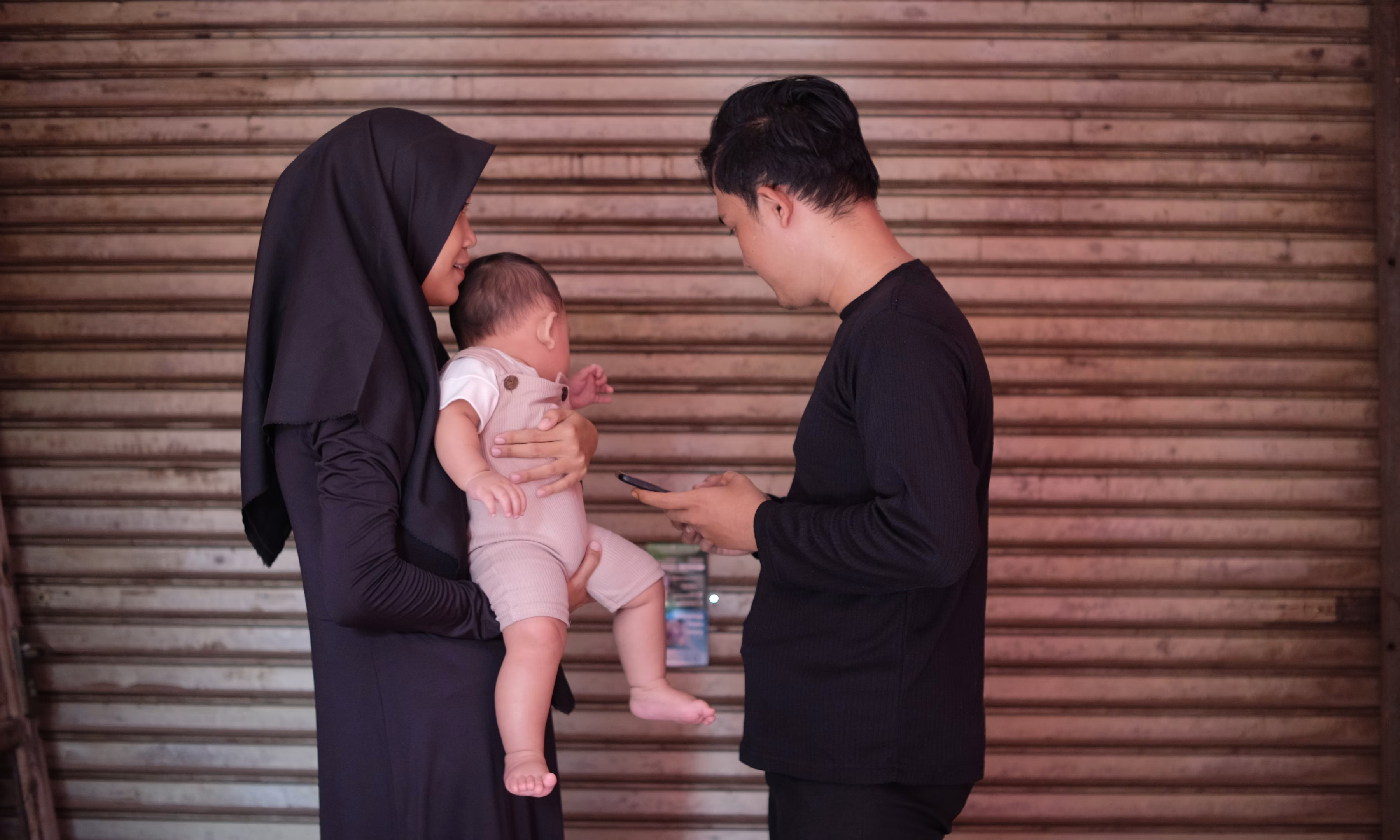
The family is the first and most essential institution in Islam. Before the masjid, before the school, before any community organisation there is the home. And the home is built or broken by the quality of fatherhood within it.
The Foundation Is Tarbiyah
Tarbiyah is not discipline. It is not performance. It is the patient, intentional cultivation of another human being nurturing their fitrah, their God-given nature, toward its fullest expression.
The Prophet ﷺ said: "The best gift a father can give his children is good upbringing." (Tirmidhi)
This is not a motivational quote. It is a legal and spiritual priority ranked above material provision, above status, above education in the conventional sense.
What Families Are Fighting Against
Muslim families today face a genuine crisis of coherence. Children are receiving formation from sources that operate 24 hours a day, that understand psychology, that are optimised for engagement:
- Algorithm-curated social media
- Peer cultures with values alien to deen
- Schooling systems built on secular assumptions
- An economy that rewards busyness over presence
A father who is not intentional about formation is not a neutral presence. He is ceding the field.
Five Principles That Make Families Work
1. Make the home a place of sacred memory
Children do not remember policies. They remember feelings, textures, the smell of a particular evening. The homes that produce grounded adults are homes where barakah was felt where Quran was heard, where du'a was audible, where parents spoke about Allah as a natural part of conversation.
Begin with small rituals. Surah Al-Mulk at night. A shared meal with no phones. A Friday morning that feels different from every other morning.
2. Father the heart, not just the behaviour
Most discipline is about behaviour. Islamic fatherhood is about the heart. The Prophet ﷺ famously advised: "Direct your children towards good, but indirectly." You are not engineering outputs. You are tending a garden.
Ask your children what they feel, not just what they did. Sit with their confusion rather than rushing to correct it. A child who trusts his father with his inner life is a child whose inner life can be shaped.
3. Be consistent in small things
Grand gestures do not build character. Small consistencies do. The father who prays Fajr every day, who keeps his promises to his children, who controls his tongue in moments of frustration that father is the lesson.
Children are brilliant anthropologists. They study us constantly. What we do in the small, unguarded moments is the curriculum.
4. Manage your own spiritual state
You cannot give what you do not have. A father who is spiritually dry, who has lost his connection to salah, who is drowning in anxiety and not seeking help that father is transmitting his distress to his children whether he intends to or not.
Invest in your own tarbiyah. Read. Attend circles of knowledge. Find brothers who hold you accountable. Your family's spiritual health is downstream of yours.
5. Repair when you fail
The Islamic concept of tawbah repentance and return is one of the greatest gifts you can model for your children. When you lose your temper, apologise. When you miss a promise, acknowledge it. When you fall short, come back.
Children who see their fathers do this learn that failure is not final, that repair is always possible, that Allah's mercy extends to the home as much as to the masjid.
The Vision of Islamic Fatherhood
The goal is not a compliant child. The goal is a child who loves Allah more than they fear punishment, who has been equipped with both deen and the tools to navigate the dunya, who carries their parents' du'a like armour into the world.
That family is possible. It requires intention, sacrifice, and the willingness to be a student again of your deen, of your children, of yourself.
Begin where you are. Begin today.
Written by
Yasir Qadhi
Mohammad Shoaib is the founder of Dadhood a platform helping Muslim fathers grow into emotionally present, spiritually grounded leaders at home. Father of three. Community educator. Host of the Dadhood Podcast.