

There is a specific ache that many fathers carry into Ramadan and rarely admit out loud. It is the memory of the man they used to be before the children came. In that former life, Ramadan meant staying in the masjid until the small hours, praying long rak'ahs with nothing pulling at their sleeve, finishing juz after juz of Quran in the quiet. Now the same man stands in his kitchen at iftar time, negotiating with a cranky two-year-old, and feels a quiet sense of loss. He is fasting, but he is not sure he is worshipping the way he used to.
That feeling is real, and it is worth taking seriously. But it rests on a mistake: the belief that worship is only the thing you do when you finally get away from your family, and that everything else the bedtime routines, the shopping runs, the babysitting is the obstacle standing between you and the real Ramadan. The truth is closer to the opposite. For a father of young children, the family is the arena of worship. The nappy change at 3am, the trolley pushed around the supermarket, the story read for the fourth time done with the right intention, these are not distractions from your Ramadan. They are your Ramadan.
Intention turns the mundane into worship
This is not a motivational reframe invented to make tired dads feel better. It sits at the centre of Islamic teaching on intention, niyyah. The Prophet ﷺ said, "Actions are but by intentions, and every man shall have only that which he intended" (Sahih al-Bukhari 1, Sahih Muslim 1907). The scholars drew a striking conclusion from this: permissible, ordinary acts eating, sleeping, earning a living, caring for one's family become acts of worship when performed with the intention of pleasing Allah and fulfilling one's duties.
Imam al-Nawawi, commenting on this hadith, noted that a person's habitual and worldly actions are transformed into acts of obedience through sincere intention. The great scholar Ibn al-Qayyim made the same point in Madarij al-Salikin: the difference between a habit ('ada) and an act of worship ('ibada) is the intention behind it.
There is a hadith that speaks directly to the exhausted father. The Prophet ﷺ told Sa'd ibn Abi Waqqas: "You will never spend anything seeking thereby the pleasure of Allah, but you will be rewarded for it, even the morsel of food that you put in your wife's mouth" (Sahih al-Bukhari 56). A morsel of food. Not a night of tahajjud a mouthful of food handed to your spouse. If that carries reward, then so does the iftar you prepared, the bills you paid so your family could break their fast in a warm home, and the hour you spent settling children to sleep so their mother could pray in peace.
What the research says about a present father
Islamic teaching and modern developmental research arrive at the same destination from different directions. Decades of research show that engaged, present fathers produce measurably better outcomes for children and that the quality of small, everyday interactions matters more than their grandeur.
The late Michael Lamb, one of the most cited researchers on fatherhood, spent his career demonstrating that children with warmly involved fathers show better emotional regulation, stronger social skills, and higher academic achievement. Crucially, Lamb's work found that it is not dramatic gestures but consistent, responsive, everyday engagement the "boring" caregiving that drives these effects.
A large body of work summarised by the U.S. Department of Health and Human Services' fatherhood research reaches similar conclusions: children with involved fathers are more likely to be emotionally secure and confident in exploring their surroundings. The ordinary presence of a father at dinner, at bedtime, in the small negotiations of family life, is doing invisible developmental work.
There is also a direct wellbeing benefit for the father himself. Research on mindful parenting indicates that parents who bring present, non-distracted attention to caregiving report lower stress and greater satisfaction and their children benefit in turn. In other words: the man who walks through the door and is genuinely there is not only worshipping better; he is parenting better and coping better.
The container is different, but it holds the same amount
Here is the reframe that unlocks everything. The father grieving his old Ramadan is comparing his current spiritual life to a version of himself that no longer exists measuring today's iman against a yardstick from a life stage that has passed.
But there is no rule that says iman must be lower now that you have a family. What changes is not the amount it is the shape. Picture the same volume of water poured into a completely different container. The litres are identical; the vessel looks nothing alike. The mistake is clinging to the old container and asking why it will not fill to the brim, when the answer is simply that it is time to pick up the new one.
Practically, this means reframing your working hours as an act of service if your job demands long or unusual hours during Ramadan, set the intention as you leave the house that this work is for the benefit and barakah of your family. It means leaving the stress at the doorstep, taking a few deep breaths before you walk in so your family feels your full presence rather than the weight you are carrying. It means filling the small gaps: people close to Allah are not the ones with the most free time, but the ones who fill the empty pockets of the day the moments waiting for the prayer rows to straighten, the quiet minute in the car with dhikr and a whispered alhamdulillah. Over a month, thirty verses memorised in stolen moments is a real achievement.
It also means recognising the "greater sadaqah." As a young single man, £10 at a charity dinner felt heroic. The £300 you now spend each week feeding your family is a larger charity on your record than that £10 ever was and you are rewarded for it. Provision is worship. And it means dropping the word "babysitting" altogether. Language shapes belief. They are not your job for the night while your wife prays they are your children, and the time is bonding, teaching, nurturing.
Ramadan as a family, not two solo missions
One trap worth naming: many couples enter Ramadan as if on opposing teams this is my Ramadan, that is her Ramadan each responsible for feeding their own soul, quietly competing for time at the masjid. That framing corrodes both the marriage and the month.
A healthier model treats Ramadan as a shared project. Sit down together before the month begins and plan it: who takes tarawih on which nights, whose turn is the last ten nights of qiyam, how the iftar and the bedtime routine get shared. Justice between spouses does not mean a rigid 50/50 split of masjid time it means honestly accounting for who has already had spiritual nourishment during the day (the commuting husband listening to Quran) and who has not (the wife who has been with the children since dawn), and rebalancing accordingly. And when it is your night to stay home so she can pray feel the sacrifice, and then remember that the sacrifice itself is written down as reward. You do not lose your Ramadan by giving her hers. You both gain it.
What the Dadhood podcast adds
This came into sharp focus in a special Ramadan episode of the Dadhood podcast, where the hosts took real questions from the Dadhood WhatsApp community.
One father asked how to balance his own "entitlement" to attend tarawih against his wife being left to babysit. The answer cut straight to the reframe at the heart of this article: "There's no babysitting. They're your children. You're spending time and bonding and relating to them... why is it a task? Why is it a chore? Is it not a blessing upon you?"
The episode returns again and again to intention and to the danger of the wrong yardstick the father comparing his current spiritual life to his university days. As one host puts it: "At any point in your life, you can always be at 100%. But that 100% will always look different... it's the same amount of litres, but the container looks completely different." On the fear that family life crowds out worship, the answer is blunt and freeing: "Every single part of it is worship it is rewardable."
The takeaway: The Ramadan you had before children is not the Ramadan you have lost it is the Ramadan that changed shape. Set the intention, be present, fill the small gaps, and plan the month as a team. The exhausted dad holding the shopping bags, doing it all for the sake of Allah, is not missing his Ramadan. He is living it.
Written by
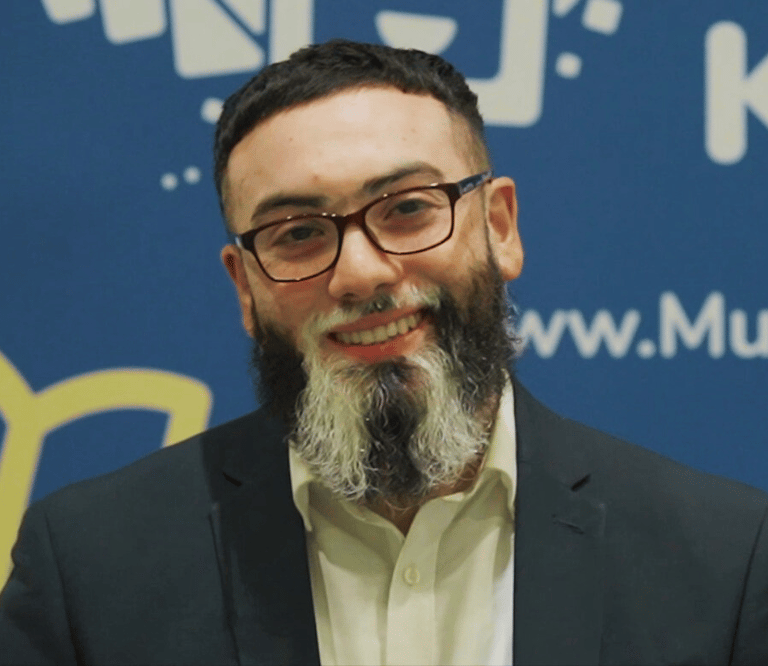
Mohammad Shoaib
Mohammad Shoaib is the founder of Dadhood a platform helping Muslim fathers grow into emotionally present, spiritually grounded leaders at home. Father of three. Community educator. Host of the Dadhood Podcast.